
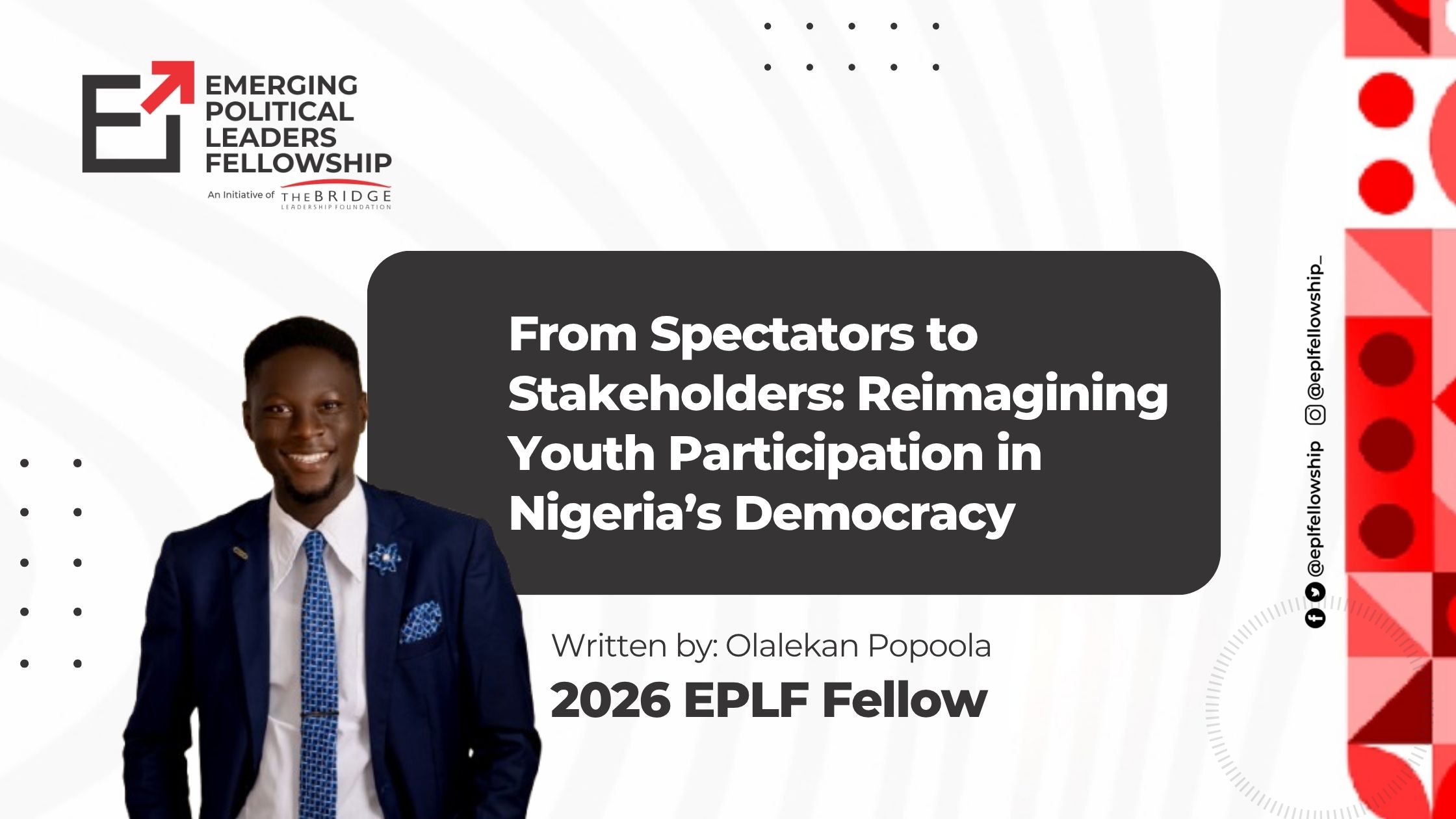
An Article written by Olalekan Popoola, a 2026 EPLF Cohort Fellow
Nigeria’s democracy has a youth problem, but not the one we often discuss. We have millions of young people with ideas, energy, and the ability to drive change, yet too many remain spectators in the very system that will determine their future. We complain about unemployment, insecurity, poor leadership, and rising living costs. We trend political issues on social media, argue about politicians, and express frustration when things go wrong. But here is the uncomfortable question: Are we participating in the decisions shaping our country, or are we only commenting on them?
Youth participation in democracy must go beyond voting every four years, attending rallies, or defending politicians online. It means taking an active role in shaping policies, demanding accountability, joining community conversations, and holding elected officials responsible for their promises. Consider a young person who complains about poor roads in their community. Beyond posting pictures online, that person can organise residents, document the problem, submit a formal complaint to the relevant authority, engage their local representative, and follow up on the response. That is what active citizenship looks like. Similarly, young people can participate by joining credible civic organisations, volunteering as properly accredited election observers, attending town hall meetings, supporting voter education, and asking candidates practical questions about education, healthcare, employment, and security.
However, we must also confront the system that discourages participation. Political intimidation, vote buying, limited access to opportunities, and the belief that politics belongs only to the wealthy can push young people away. Some are even recruited to defend politicians whose actions they would ordinarily criticise. We cannot demand accountable leadership while excusing the misconduct of leaders simply because they belong to our preferred political camp. Our loyalty must be to the future of Nigeria, not to a politician’s personal interest.
Young people also need to understand that leadership does not begin with winning an election. It begins with identifying a problem and organising people to solve it. A young person who mobilises a community to improve sanitation, supports vulnerable families, educates voters, or challenges injustice peacefully is already contributing to democracy. But individual action is not enough. Youth organisations must build lasting networks, engage policymakers with evidence, develop practical solutions, and move beyond activities that end when photographs are taken. Political parties, government institutions, and civil society must also create genuine spaces where young people can influence decisions, not merely provide campaign crowds.
The 2027 election cycle presents another opportunity, but the real test is what we do before, during, and after election day. Will we register, verify information, vote responsibly, protect the integrity of the process, and continue demanding results from those elected? Nigeria does not lack young people who want change. What we must build is a generation willing to organise for it, question power, and take responsibility for the future it demands.
The future will not change simply because young people are angry. It will change when that anger becomes organised action, when our voices become decisions, and when we stop waiting for someone to give us a seat at the table.
Young Nigerians, the question is no longer whether we are the leaders of tomorrow. It is whether we are ready to become responsible stakeholders today.
Written by Olalekan Popoola, 2026 EPLF Cohort Fellow
