
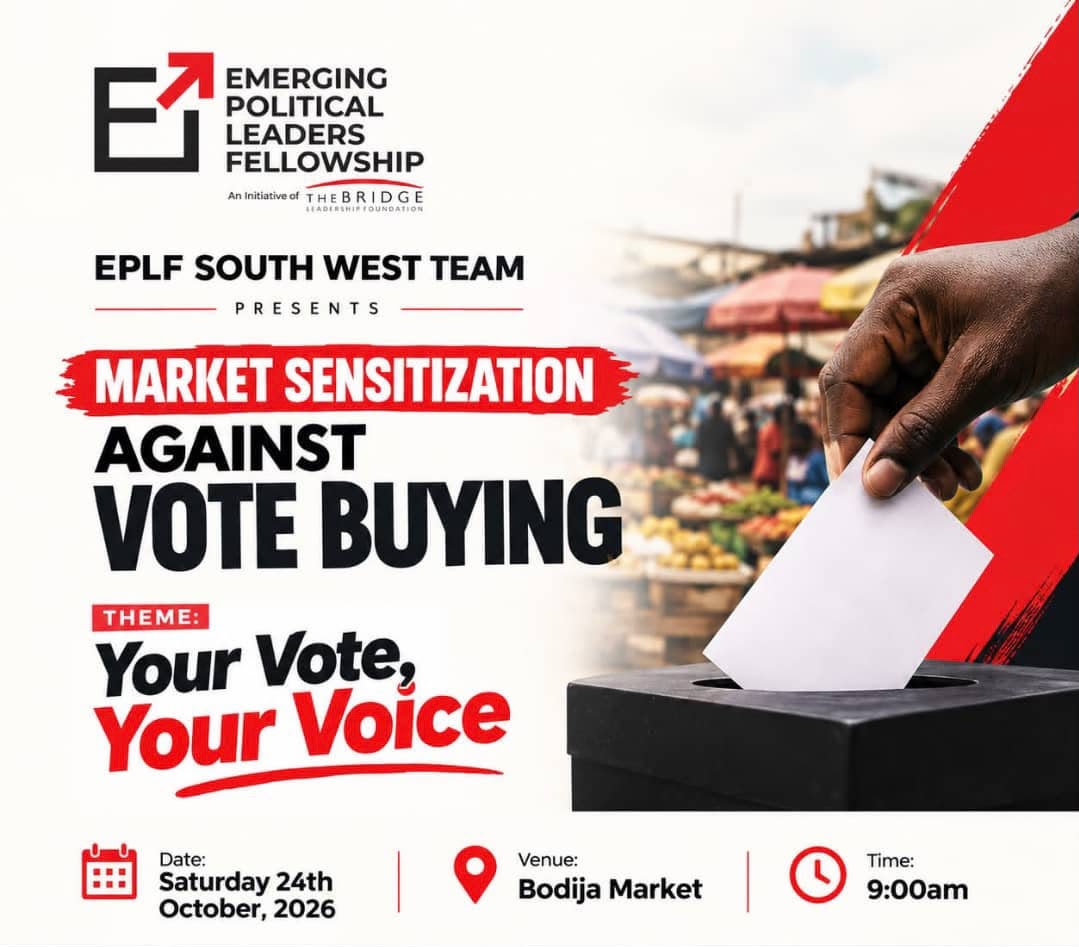
At Bodija Market, Ibadan, the South-West Legacy Project reminded traders that their future is not for sale.
There are conversations about leadership and democracy that cannot happen only within conference rooms. Sometimes, they must take place where people live, work, trade, and make everyday decisions that shape their future.
If Nigeria is to make meaningful progress, citizens must be part of the conversation about governance, accountability, and democratic participation. This requires taking civic education beyond formal spaces and into the communities where these conversations matter most.
This understanding inspired the Fellows of the Emerging Political Leaders Fellowship (EPLF) to take their SouthWest Legacy Project to Bodija Market, Ibadan, with a clear message for traders and other members of the community: Your vote is your voice, and your future is not for sale.
Beyond the Fellowship Walls
The Legacy Project is an integral part of the EPLF experience. It provides Fellows with an opportunity to translate the knowledge, values, and leadership skills acquired during the Fellowship into practical interventions that address issues within their communities.
For the SouthWest Team, the choice of location was Bodija Market, one of Ibadan’s prominent commercial centres.
With traders, buyers, transporters, and families moving through the market daily, Bodija provided an opportunity to engage people from different backgrounds and encourage conversations about the importance of responsible citizenship and electoral participation.
The team recognised that the fight against vote buying must extend beyond political conversations and reach the everyday citizens whose votes shape the country’s democratic process.
Not to Campaign, but to Remind
The Fellows did not visit Bodija Market to campaign for any political candidate or party. Their mission was to promote voter awareness and remind citizens of the value of their votes.
Armed with placards, conviction, and a commitment to civic education, they moved through the market, engaging traders and buyers in conversations about electoral integrity and the dangers of vote buying.
Speaking in Yoruba, Pidgin, and English, they communicated a message that transcended language and background:
Your vote is your voice. Your future is not for sale.
Say No to Vote Buying.
OWO KÒ GBÓDÒ RA ỌJỌ́ Ọ̀LA WA.
Money must not buy our tomorrow.
Through these engagements, the Fellows encouraged traders to recognise that their votes represent their choices, interests, and expectations for the future.
A Message That Resonated Through the Market
From one stall to another, the campaign created opportunities for meaningful conversations.
Traders paused from their daily activities to listen and engage. Some expressed agreement with the message, while others shared their experiences and perspectives on elections and political participation. The Fellows responded to questions and concerns, encouraging open conversations about the responsibilities of citizens in a democracy.
At the heart of the engagement was a simple but important message: a vote carries a value that cannot be measured by the immediate financial benefit offered in exchange for it.
The Fellows highlighted the importance of looking beyond temporary incentives and considering the long term implications of electoral decisions.
They reminded traders that the power of a Permanent Voter’s Card extends beyond election day. It represents an opportunity to participate in choosing leaders, influence the direction of governance, and demand accountability from elected representatives.
The message was not about blaming citizens for their choices. Rather, it was about encouraging informed decisions, strengthening civic awareness, and reminding people that their participation in democracy matters.
Why This Matters
Vote buying raises concerns about electoral integrity and the ability of citizens to exercise their voting rights freely. When financial inducements influence electoral decisions, the principles of informed participation and democratic accountability are undermined.
The SouthWest Legacy Project sought to address this concern by taking civic education directly to the people.
Its message to the traders of Bodija was clear: their voices matter, their participation matters, and their decisions
