
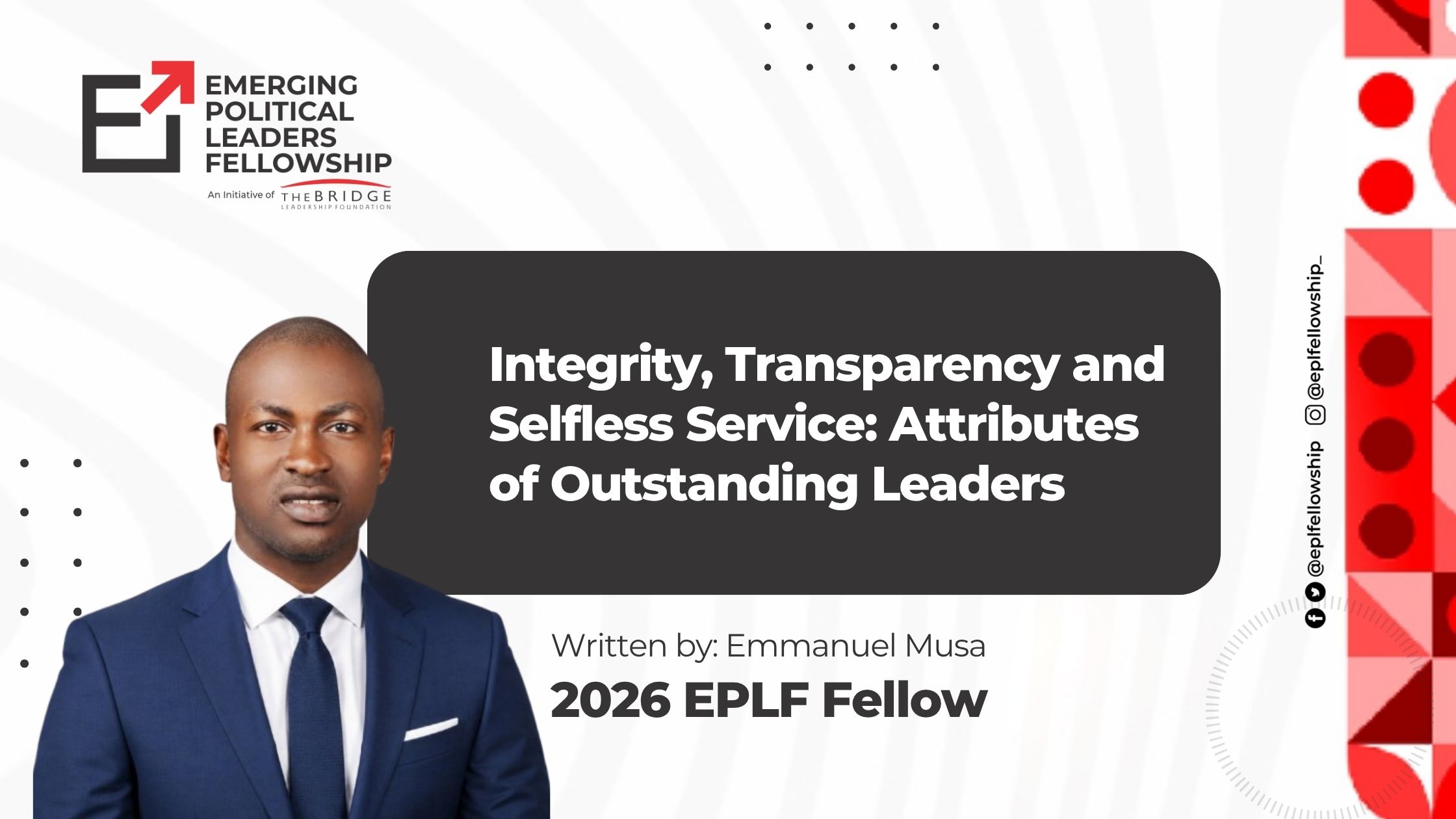
An Article written by Emmanuel Musa, 2026 EPLF Cohort Fellow
In 2014, during my National Youth Service Corps (NYSC), I was privileged to occupy three pivotal leadership positions. I was appointed the Secretary-General of the Nigeria Christian Corpers Fellowship (NCCF), the Corps Liaison Officer (CLO) at my Place of Primary Assignment (PPA), and, most importantly, the President of my Community Development Service (CDS) group, known as the Service and Delivery CDS Group.
My greatest test of integrity, transparency, and selfless service came when we were about to round up our National Service. As was customary, every CDS group usually organized a dinner as part of the activities marking the end of the service year.
My executives pressured me to use all the resources in our bank account to organize the dinner, but I vehemently rejected the idea. They were all unhappy with my decision, but I remained firm. I insisted that we should leave a legacy and, more importantly, leave funds behind for those who would take over from us. That decision earned me recognition and an award from the NYSC Management. They later discovered that our CDS group was the only group that had left funds in its account, while other CDS groups had spent all the money in their accounts.
This brief story demonstrates my commitment to Integrity, Transparency, and Selfless Service as an emerging political leader. It reflects my belief that leadership is not about what we can take for ourselves, but about what we can preserve, improve, and leave behind for those who come after us.
Leadership is not defined by the position a person occupies, the title attached to their name or the amount of power they possess. True leadership is measured by character, responsibility and the impact a person makes on the lives of others.
Among the most important qualities of an outstanding leader are integrity, transparency and selfless service. These attributes create trust between leaders and the people they serve and provide the foundation for responsible governance.
Integrity: The Foundation of Leadership
Integrity means doing what is right even when nobody is watching. An individual with integrity keeps promises, tells the truth, takes responsibility for mistakes and refuses to compromise important principles for personal benefit.
A leader may possess intelligence, wealth, political influence or academic qualifications, but without integrity, these qualities can easily be misused.
Integrity therefore answers a fundamental leadership question:
Can people trust you with responsibility?
In public leadership, integrity means treating public resources as a trust rather than personal property. It means making decisions based on the public interest rather than personal enrichment or favouritism.
Transparency: Making Leadership Accountable
Transparency means openness in decision-making and the responsible disclosure of information that citizens have a legitimate right to know.
Transparent leaders do not operate as though public institutions belong to them. They understand that citizens have a right to ask questions about government policies, public resources and decisions.
Transparency encourages accountability because people can better evaluate what their leaders are doing when information is accessible.
A transparent leader should be able to say:
“Here is what we promised. Here is what we have done. Here is what remains to be done. And here is how public resources have been used.”
That culture of openness strengthens public confidence.
Selfless Service: Putting People First
Selfless service means placing the interests of the people above personal ambition.
Conclusion
Nigeria does not only need leaders with impressive titles. It needs leaders with strong character, transparent systems and a genuine commitment to service.
Integrity gives leadership credibility.
Transparency gives leadership accountability.
Selfless service gives leadership purpose.
Written by Emmanuel Musa, 2026 EPLF Cohort Fellow
